Help your surveyors use AI well, without the compliance drag.

I set up RICS-regulated firms on Claude, within the Microsoft 365 you already run — the training, the setup, and the compliance record the RICS AI Standard requires, all produced as your people work.

A tall collage of a market-town surveyor's office — church tower through the sash window, a desk with laptop and amber lamp, a dog asleep beside the chair

What I do

Most firms face the same problem. The fee earners’ time disappears into admin — filing, formatting, chasing, re-keying — and AI is meant to help, but nobody’s sure how to use it without making a mess.

I start by looking at where your hours actually go. I build the workflows that return those hours, train your people to use them, and set the whole thing up on Claude, working within the Microsoft 365 you already run. Under the hood, the compliance record required by the RICS writes itself in the background.

The RICS AI Standard has been mandatory since 9 March 2026. Compliance with it is part of the setup, not a separate project.

How the engagement works

I start with the low-hanging fruit — the boring, high-volume admin where hours quietly slip away. Email filing. Data entry into spreadsheets. The monthly client report.

We scope the work together, then I build the workflows and skills tailored to your firm, running on your own Claude. You pay to build them once, at £120 an hour. There are no ongoing fees for anything I build. Once a workflow is running, it’s yours. If it needs changing later, that’s billed hourly too. If it doesn’t, you never pay for it again.

Three layers, one setup

Everything sits in three layers.

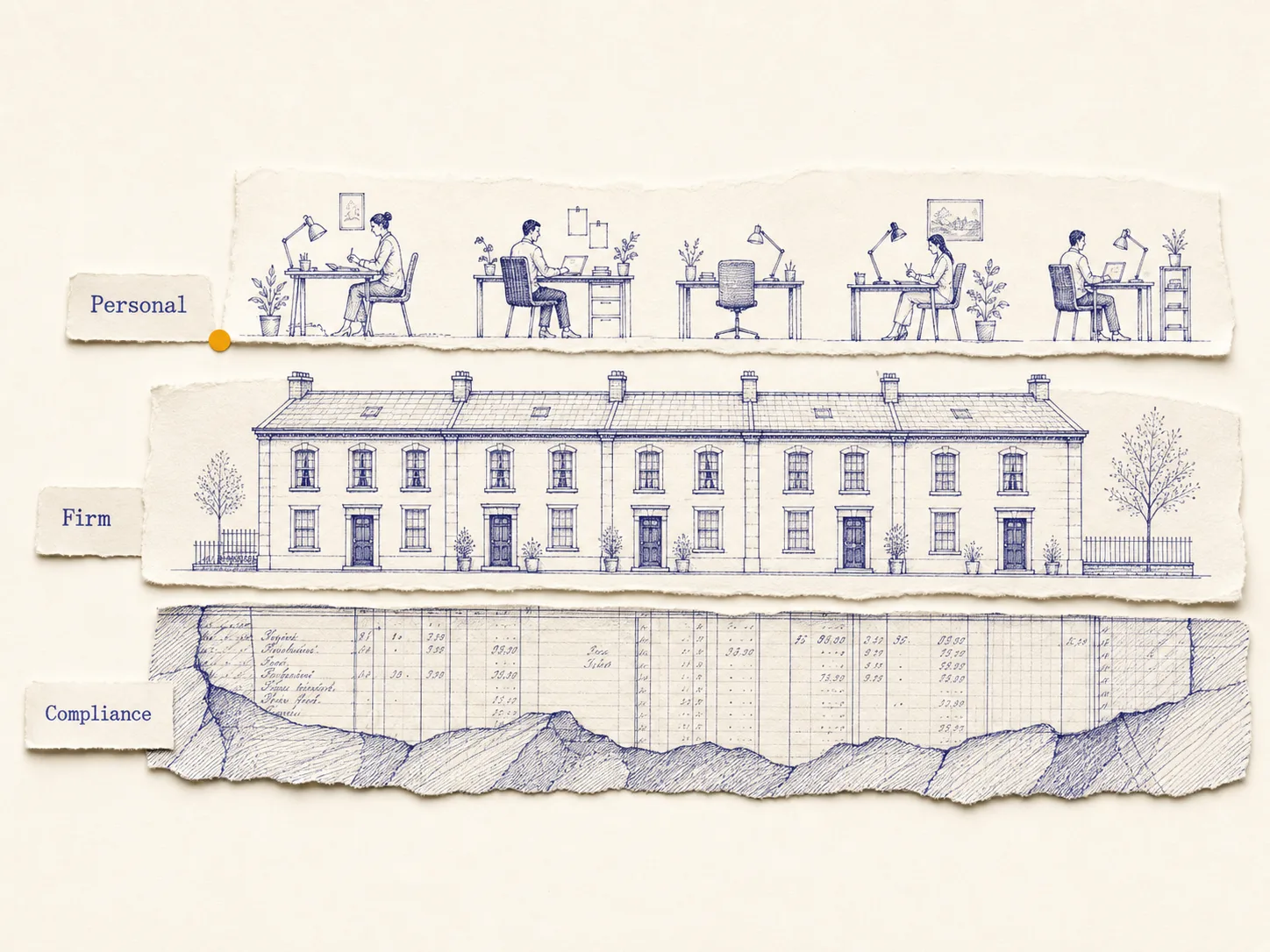
A layered stack of ledgers, folders and archive slabs representing the compliance, firm and personal layers

Compliance layer — always on. As your people work, the reliability file notes, the audit trail, and the quarterly paperwork the Standard requires are generated in the background. Nobody fills anything in.

Firm layer — built once, shared by everyone. Your house voice, your filing conventions, and the way your firm operates — so every draft sounds more like your firm from day one.

Personal layer — each person’s own. What they’ve asked Claude to remember and how they like to work. Theirs to shape.

Chronity Connect is the platform that runs all three and links them together.

How it goes

The first few weeks seem quiet. People try Claude on a task, then scrutinise every line of its output. Nothing dramatic happens. They’re building trust.

Then someone finds the first real shortcut — the report that used to take until mid-afternoon is now done before lunch — and mentions it to the person at the next desk. The pace picks up from there. Gradually, then suddenly.

We start small, with a handful of people, and grow from there. That’s the honest shape of it, and it’s the shape I plan for.

A downland field where a faint track crosses a stile and becomes a well-worn path climbing the hillside

What this looks like

Fee earners at a rural surveying firm in Wessex were spending up to three hours a week filing emails. Claude was shown the firm’s filing patterns — which emails belong in which inbox subfolders and what gets filed to SharePoint for the whole team to find.

Now they tell Claude to ‘File my emails’ and get back a screen of suggestions: where each email should go and whether it belongs on SharePoint so colleagues can find it. They glance down the list, correct the odd one, and approve. The setup is self-learning and improves with every change the user makes. Every week, two hours are reclaimed for client work.

Elsewhere: daily gains from Claude knowing where things are stored on SharePoint. Every night, Chronity Connect takes a snapshot, so Claude is aware of any new clients or directories, reducing the to-ing and fro-ing as Claude works out where to find or file things.

The firm’s tone of voice was built from exemplar documents, reports and emails, and distilled into patterns and styles that make it much more likely that Claude will get it right, or very nearly right, first time.

A collage of archive folders and filed correspondence

Plain pricing

Two parts, no hedging.

£10 per user per month — for the platform. Chronity Connect, the compliance record, and your firm’s tools on Claude. No contract. Cancel any time.

£120 per hour — the setup. Training, house voice, skills, workflows, agents — scoped in conversation and built once. No ongoing fees for anything I build.

I build it. It’s yours. The £10 keeps the record going.

What you’ll need

Two things need to be in place before we start. Neither is complicated, and getting them sorted is part of the pre-work we do together.

A Claude Team subscription from Anthropic. Anthropic sets a minimum of five users on the Team plan, so five seats is the smallest we can start with.

Microsoft 365 across the organisation. Email, SharePoint, Word, and Excel — the everyday Microsoft setup, used firm-wide. Everything I build runs inside it.

If you want the technical summary — what the record contains, how classification works, and where your data lives — it’s all on how it works.

Jack

Chronity is me — Jack. I’m the Founder, based in Mere, Wiltshire. I qualified as a rural practice surveyor many moons ago, and I now work with RICS compliant firms to help them roll out, improve, monitor and regulate their use of AI. I work with a small number of firms at a time, so when you have a question, you get me, not an account manager. You deal with the person who did the work.

Talk to Jack

Twenty minutes, no slides. I’ll tell you where I think AI would earn its place in your firm, and where it wouldn’t. If it isn’t a fit, I’ll say so.